When Doubt Shows Up
I remember staring at an email with a job offer and thinking it had to be a mistake. My name was on it, but it didn’t feel like it was meant for me.
Impostor syndrome shows up in many ways. Sometimes it’s loud. Other times, it’s just this constant background noise that makes you question yourself, even when everything is going well.
For me, it usually showed up as not believing in myself. When something good happened, my first reaction wasn’t, “I earned this.” It was, “They made a mistake.”
Windows 95 and the First Spark
My dad took me to a closing CableVision warehouse when I was about 10 or 11. If you’re not from the Northeast or old enough to remember, it was a cable TV provider.
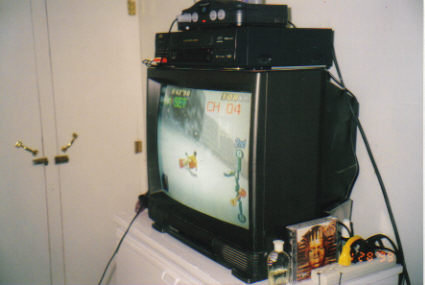
We came home with a beige Compaq and one of those heavy tube monitors. It felt like it weighed 200 pounds altogether. I still don’t know how my desk supported it. Once I had everything connected, I tried to power it on.
So my dad found someone who worked on computers and could make it work. I still remember watching him install Windows 95. I sat there in amazement. It was so cool to watch someone resurrect a nonfunctional computer. Going from disappointment to that feeling of satisfaction was thrilling.
And honestly, I still get that same thrill now when something finally works.
The Tinkerer in Me
I was always tinkering with anything I could get my hands on. As a kid, toys were never safe. They eventually got taken apart. So naturally, the old Compaq became one of my victims.
I’d go to the library to find books on computers. I wanted to learn what those computer components were. I wanted to know what purpose every component had.
Since then I have always been into computers. For most people close to me, that’s no surprise. When I was about twelve, I even wrote an essay about what I wanted to do when I grew up. I wrote about how I wanted to work in IT and make $80,000 a year. I don’t remember why I was so specific about the salary. However, I think I was a bit of a go-getter even then.
At the time, I didn’t think much of any of it. It just felt normal to me. Looking back, it was probably one of the earliest signs of where I was headed. That curiosity stayed with me, even as my path started to look different from everyone else’s.
Learning Without a Blueprint
My path into tech wasn’t traditional. Leaving high school early and earning my GED became a stepping stone. It taught me how to adapt, learn fast, and figure things out without a blueprint. In a lot of cases, I had to figure things out on my own. By then, that came naturally because of how much I’d already been tinkering and experimenting.
I entered the workforce early. Over time, my roles naturally started to include more technical responsibility, even when it wasn’t officially part of the job. Most of what I learned came from doing the work, not sitting in the classroom. Even so, the self-doubt never fully went away. I always wanted to do better. I had the drive. Still, there was this quiet feeling that I was somehow behind.
The Project That Turned Into an IT Offer
At that point in my career, I wasn’t in IT. I was working in an operations role. I got involved in an implementation project because I understood the front-end workflows. I could help bridge gaps between operations and the technical teams.
As the project moved along, I kept getting pulled into the technical pieces. I started becoming the person people called when something needed to be figured out. Next thing I knew, it turned into an IT offer.
I remember reading the offer email multiple times, trying to convince myself it was real. It should have felt like a win. Every time opportunities like this came up, impostor syndrome crept back in. It felt like a recurring bad dream.
Then the comparisons started. I looked around at people with computer science degrees, certifications, and years of formal experience. I wondered how I fit into that world. In my head, those were “real” IT professionals, and I wasn’t sure I belonged in the same room.
The Cutover That Made Me Trust Myself
The turning point didn’t happen the day I got the offer. It happened years into the job, after enough real situations stacked up.
I noticed how often people came to me for help. They trusted me with things that actually mattered. This happened even when I was still questioning myself. I kept getting pulled into critical, high-priority situations, the kind where things needed to work immediately.
Printing was a big one.
At my first organization, we were migrating our printing structure using Optio MedForms. However, the Windows Print Management Server environment wasn’t where it needed to be. We were about three to four months out from the cutover deadline. Typically, this is when technical dress rehearsals should have been happening. It was not the time for last-minute stabilization.
There was very little support to get things across the finish line. I got a quick, down-and-dirty walk-through from the vendor and ran with the limited information I had. I transitioned from building MedForms templates. Then I handled the server-side setup and deployment work. This was necessary so we could move toward a real go-live.
We didn’t have time for a full rehearsal. Given the timeline, we decided to iron out issues after cutover. That could’ve gone badly. Instead, the servers held under heavy load, and we came out of cutover with very few tickets. In a hospital, printing is one of those systems that only gets noticed when it fails.
That was one of the first moments when it became harder to argue with myself. I might not have had the perfect background on paper. However, I was solving real problems. I kept critical systems running when it mattered.
What I Learned
What’s changed since then isn’t that the doubt disappeared. It’s that I recognize it faster. I don’t panic when it shows up. I don’t assume it means I’m failing. I’ve learned that doubt usually shows up right before I’m learning something new, not because I don’t belong.
Later on, I learned this experience is more common than people think. That’s especially true when you’re the first in your family to navigate professional or technical spaces. It can be challenging without much context or reassurance that you’re doing it right. When you’re building a career without a roadmap, self-doubt can come with the territory. Understanding that helped me reframe my experience. It wasn’t a personal failure. It was part of the process.
Overcoming impostor syndrome wasn’t one big breakthrough moment. It was built over time. Each problem solved. Each moment where the work spoke louder than the doubt.
If there’s one thing I hope you take away from this, it’s that doubt doesn’t disqualify you. It usually shows up when you’re stretching, not when you’re failing. Confidence doesn’t come first. It comes after you stay long enough to see what you can actually do.